


Imaginez un patrouilleur fendant les houles de minuit. Les embruns fouettent le pont, la pluie martèle le bastingage et la coque tremble à chaque vague. Montée sur le mât, une caméra thermique PTZ doit maintenir sa vue stable, identifiant un bateau de pêche à deux miles de distance malgré le chaos. Qu'est-ce qui permet à cette caméra de fonctionner sous une telle épreuve ? Deux spécifications répondent à cette question : IP67 et un gyroscope numérique. IP67 signifie que le boîtier est étanche à la poussière et résiste à une immersion dans un mètre d'eau pendant trente minutes. Le gyroscope numérique détecte le mouvement et stabilise l'image. Cet article explique ces fonctionnalités simplement, montre comment elles fonctionnent ensemble et vous aide à évaluer les installations de surveillance extérieures ou mobiles.
Points clés
-
L'indice IP67 garantit une protection étanche à la poussière et à l'eau, idéale pour les conditions extérieures difficiles.
-
Le gyroscope numérique stabilise l'image en neutralisant le mouvement, crucial pour des vues claires sur des plateformes mobiles.
-
Ensemble, ces fonctionnalités réduisent les coûts de maintenance et améliorent la fiabilité de la surveillance dans les environnements marins et industriels.
L'indice IP67 expliqué pour les caméras thermiques PTZ
Ce que signifie le code IP67
Le code IP, ou indice de protection (Ingress Protection), utilise deux chiffres pour définir le niveau d'étanchéité d'un boîtier contre les corps étrangers et l'humidité. Le premier chiffre concerne les solides. Un indice de 6 signifie que le boîtier est étanche à la poussière : aucune particule ne peut pénétrer, même sous vide. Le second chiffre concerne les liquides. Un indice de 7 signifie que le boîtier survit à une immersion temporaire dans l'eau jusqu'à 1 mètre de profondeur pendant 30 minutes. Ensemble, IP67 vous indique que le boîtier de la caméra est totalement étanche à la poussière et résiste à une brève submersion sans dommage interne.
|
Chiffre IP |
Niveau de protection |
Définition |
|---|---|---|
|
Premier chiffre 6 (Poussière) |
Étanche à la poussière |
Aucune pénétration de poussière ; protection complète contre le contact |
|
Second chiffre 7 (Eau) |
Immersion temporaire |
Aucune pénétration d'eau nocive jusqu'à 1 mètre pendant 30 minutes |
La certification nécessite de réussir des tests standardisés. Pour l'indice de poussière, les techniciens placent le boîtier dans une chambre scellée où de la fine poudre de talc circule pendant jusqu'à 8 heures. Ils appliquent un vide pour s'assurer qu'aucun espace ne pourrait aspirer des particules à l'intérieur. Pour l'indice d'eau, ils immergent le boîtier à 1 mètre de profondeur pendant 30 minutes selon les normes IEC 60529. Après les deux tests, les inspecteurs vérifient l'intérieur pour détecter toute trace d'humidité ou de particule. La caméra doit rester pleinement opérationnelle pour obtenir la désignation IP67.
Ces tests valident bien plus que le simple boîtier. Ils confirment la conception du joint, l'intégrité de l'étanchéité et la robustesse des connecteurs. Chaque entrée de câble, chaque joint d'objectif, chaque panneau d'accès doit maintenir son étanchéité sous pression. Un seul point faible compromet l'ensemble de l'indice.
Durabilité dans des conditions météorologiques extrêmes
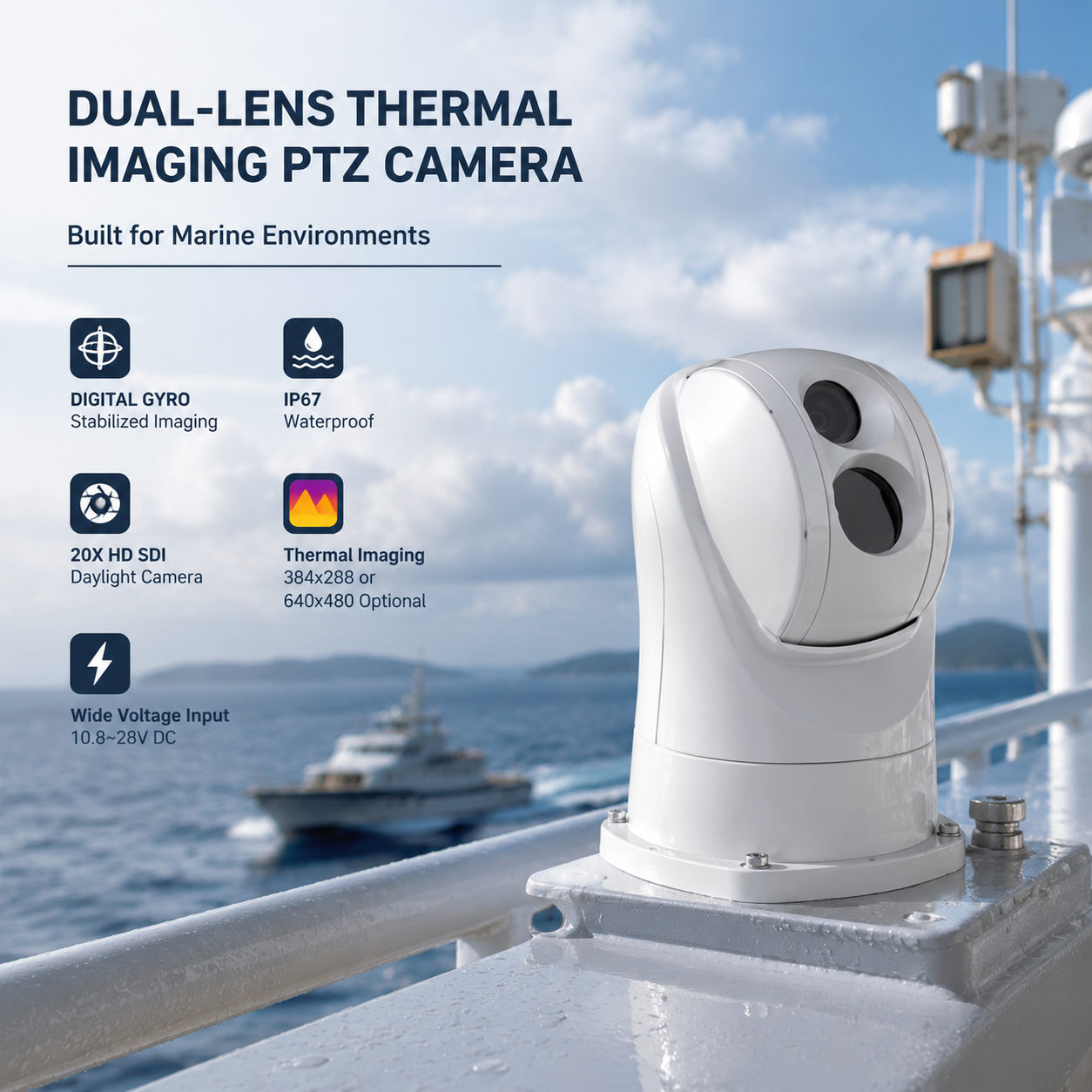
L'IP67 est le plus important lorsque vous montez une caméra thermique PTZ dans un environnement qui met l'équipement à rude épreuve. Les sites marins et côtiers présentent les conditions les plus difficiles. Les embruns salins corrodent le métal non protégé. L'humidité s'infiltre dans les boîtiers non scellés et se condense sur les composants internes. Les variations de température font que les matériaux se dilatent et se contractent, ouvrant progressivement des espaces microscopiques. La série WINSAFE PATC fonctionne de -25°C à +55°C, une plage qui couvre la plupart des installations extérieures dans le monde.
Considérez la différence entre IP66 et IP67. Les deux indices offrent une protection complète contre la poussière. L'IP66 résiste aux jets d'eau puissants venant de n'importe quelle direction (forte pluie, jet de tuyau, neige). L'IP67 ajoute une capacité d'immersion. Pour une caméra montée sur un patrouilleur, les vagues peuvent submerger le pont. Pour une unité de surveillance côtière près du rivage, les ondes de tempête pourraient brièvement inonder la zone de montage. L'IP67 gère ces scénarios ; l'IP66 ne le fait pas.
Une caméra classée IP67 est étanche à la poussière, à la pluie et protégée contre l'immersion temporaire. Le premier chiffre '6' signifie une protection totale contre la pénétration de particules, tandis que le second chiffre '7' signifie une protection contre l'immersion jusqu'à 30 minutes. Cela garantit que les composants internes de la caméra thermique restent scellés contre les contaminants environnementaux.
L'IP67 réduit également les coûts de maintenance. Les tempêtes de sable dans les régions désertiques obstrueraient autrement les ports de ventilation et recouvriraient les capteurs internes. La condensation due aux changements d'humidité embuerait les objectifs et corroderait les circuits imprimés. Les embruns salins attaqueraient les connecteurs non protégés. Avec un joint IP67 approprié, vous évitez totalement ces modes de défaillance. Le boîtier protège l'investissement à l'intérieur.
Une mise en garde : les indices IP ne couvrent pas la résistance chimique. Des agents de nettoyage agressifs peuvent endommager les unités même avec des indices IP élevés. Si vous nettoyez votre caméra avec des solvants puissants, vérifiez séparément la compatibilité avec le matériau du boîtier. L'indice IP67 concerne l'infiltration environnementale, pas l'attaque chimique.
Comment le gyroscope numérique stabilise l'imagerie thermique
Un gyroscope numérique agit comme une oreille interne électronique pour votre caméra thermique PTZ. Il détecte la rotation, pas la position. Cette distinction est importante pour la stabilisation. Le gyroscope mesure la vitesse angulaire (la vitesse et la direction de la rotation autour d'un ou plusieurs axes). Il indique au système de caméra à quelle vitesse l'unité pivote, s'incline ou tourne, et non où elle se situe dans l'espace.
Le rôle du gyroscope dans la détection de mouvement
Le gyroscope numérique utilise la technologie MEMS (systèmes micro-électro-mécaniques). Ces minuscules structures en silicium détectent le mouvement de rotation par des changements microscopiques de capacité. Lorsque la plateforme de votre caméra tangue ou roule, le capteur MEMS enregistre instantanément cette vitesse angulaire. Le gyroscope envoie alors une commande de correction à l'unité panoramique/inclinaison, qui applique une rotation opposée pour contrer la vibration.
Cette correction mécanique s'avère essentielle pour l'imagerie thermique. Les caméras thermiques PTZ fonctionnent souvent avec des champs de vision inférieurs à 1°. Une vibration de 2° provoque un décalage d'image de 200 % à ce grossissement. La stabilisation électronique d'image (EIS) numérique ne peut pas gérer ce scénario. L'EIS repose sur le chevauchement des images et le recadrage, ce qui échoue lorsque les décalages dépassent 100 %. Le gyroscope MEMS fournit la détection de mouvement en temps réel nécessaire à la contre-rotation mécanique qui maintient l'image thermique verrouillée sur la cible.
Un filtre complémentaire combine les données du gyroscope avec les lectures de l'accéléromètre. L'accéléromètre assure une stabilité à long terme pour les changements d'orientation lents. Le gyroscope offre une précision à court terme pour les mouvements rapides. Ensemble, ils éliminent les erreurs de dérive que chaque capteur produit indépendamment. Cette fusion vous donne un suivi fiable de l'angle de roulis et de tangage, même pendant un mouvement dynamique.
Réduire le flou pour des images plus claires
La série WINSAFE PATC intègre un gyroscope numérique à axe unique pour la stabilisation verticale. Cette fonctionnalité optionnelle détecte les mouvements de tangage et de roulis dus aux vagues, au vent ou aux vibrations du pont. Le gyroscope envoie des corrections au système de cardan, qui ajuste le mécanisme d'inclinaison de la caméra pour compenser. Le résultat : une image stable même lorsque votre navire tangue dans une mer agitée.
Un capteur gyroscopique mesure la vitesse angulaire (la vitesse et la direction de la rotation autour d'un ou plusieurs axes). Il vous indique à quelle vitesse quelque chose tourne, et non la distance parcourue en ligne droite. C'est pourquoi les gyroscopes sont utiles lorsqu'un objet pivote, s'incline ou tourne.
Cette stabilisation améliore directement l'identification de la cible. Lorsque l'image reste stable, vous pouvez distinguer un petit bateau de pêche d'un conteneur flottant à distance. Vous pouvez lire les marquages de coque ou identifier les types de navires. Sans stabilisation, le flou de mouvement étale ces détails sur plusieurs pixels, rendant la reconnaissance impossible.
La valeur du gyroscope augmente avec le grossissement. Avec un zoom optique 30x, même un mouvement mineur de la plateforme crée un tremblement d'image spectaculaire. Le gyroscope numérique compense ces mouvements avant qu'ils n'atteignent votre écran. Vous maintenez votre connaissance de la situation sans avoir à lutter contre l'image pour garder les cibles en vue.
Pour les applications marines, cette capacité s'avère essentielle. Les patrouilleurs restent rarement immobiles. La houle, le sillage et le vent provoquent des mouvements. Le gyroscope absorbe ces perturbations, vous permettant de vous concentrer sur la mission plutôt que de lutter avec les commandes. Il en va de même pour les sites industriels où les machines lourdes génèrent des vibrations constantes.
|
Spécification |
Valeur |
|---|---|
|
Axe gyroscopique numérique |
1 (Optionnel) |
|
Fonction |
Stabilisation d'image |
Le gyroscope du WINSAFE PATC fonctionne en continu pendant l'utilisation. Il ne nécessite aucun étalonnage de votre part. Il surveille simplement le mouvement et applique des corrections en temps réel. Ce fonctionnement mains libres le rend pratique pour les déploiements de surveillance 24h/24 et 7j/7 où les opérateurs ne peuvent pas ajuster constamment la caméra.
Avantages combinés pour les utilisateurs de caméras thermiques PTZ
Conçu pour les environnements difficiles
L'indice IP67 et le gyroscope numérique fonctionnent de concert. Le boîtier protège les composants internes de la poussière, de l'humidité et des embruns salins. Le gyroscope neutralise le flou de bougé, maintenant l'image stable sur les plateformes mobiles. Vous bénéficiez d'un fonctionnement fiable 24h/24 et 7j/7 dans des conditions qui mettraient hors service des équipements de moindre qualité.
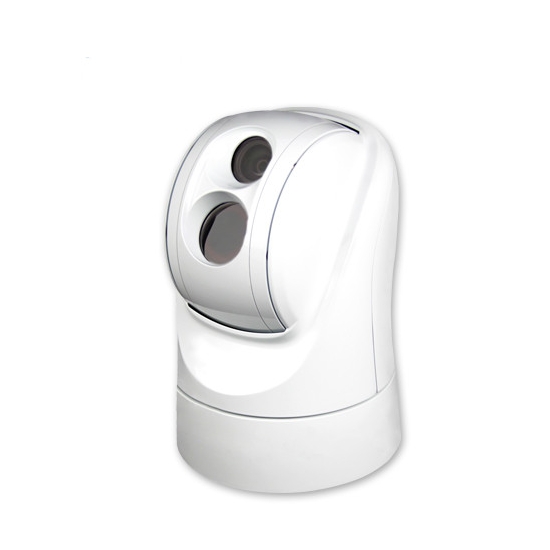
La série WINSAFE PATC illustre cette combinaison. Son système à double objectif associe une caméra thermique à une caméra vidéo analogique diurne 36X. L'objectif thermique offre une résolution de 640x480 ou 384x288. Le mécanisme panoramique pivote sur 360 degrés en continu, et la plage d'inclinaison couvre 115 degrés. Un boîtier classé IP67 scelle l'ensemble. Le gyroscope numérique optionnel stabilise l'image contre le mouvement du navire.
|
Caractéristique |
Spécification |
|---|---|
|
Options d'objectif thermique |
Résolution 640x480 et 384x288 |
|
Capacité panoramique |
360 degrés |
|
Capacité d'inclinaison |
115 degrés |
|
Zoom optique diurne |
36X analogique |
|
Indice de protection environnementale |
IP67 |
La protection IP67 prolonge la durée de vie de la caméra dans les environnements industriels poussiéreux. Le boîtier empêche les fines particules de pénétrer et d'endommager les composants. Il résiste à une immersion jusqu'à un mètre, protégeant contre la corrosion due à l'humidité. Cette étanchéité est conçue pour les environnements difficiles, garantissant une fiabilité à long terme.
-
Les appareils classés IP67 sont totalement étanches à la poussière.
-
Ils résistent à une immersion temporaire jusqu'à un mètre.
-
L'utilisation constante de matériel classé IP67 dans des conditions exigeantes conduit à une durée de vie utile plus longue.
Principales applications : maritime, industriel et surveillance
Ces caméras jouent des rôles essentiels. Les opérations de sécurité maritime les utilisent pour la surveillance portuaire et les patrouilles anti-piraterie. Les systèmes de surveillance côtière les déploient pour le contrôle des frontières. Les sites industriels comptent sur elles pour la sécurité périmétrique et la surveillance des équipements. Les infrastructures critiques telles que les centrales électriques et les plateformes pétrolières dépendent de leur imagerie robuste.
Les plateformes pétrolières offshore présentent des conditions extrêmes : soleil éblouissant, fortes pluies et vents violents. Les caméras thermiques PTZ doivent être conçues pour y résister tout en conservant une imagerie claire. Le boîtier IP67 et la stabilisation gyroscopique rendent le WINSAFE PATC adapté à ces applications.
|
Défi environnemental |
Problème spécifique |
Atténuation / Solution |
|---|---|---|
|
Températures extrêmes |
Les caméras standard tombent en panne en cas de chaleur ou de froid |
Utiliser des caméras de haute qualité avec des boîtiers environnementaux et des éléments de chauffage/refroidissement |
|
Corrosion |
Exposition à l'eau salée et aux produits chimiques |
Utiliser des matériaux résistants à la corrosion dans la construction de la caméra |
|
Faible visibilité |
Tempêtes de poussière, pluie, brouillard, neige |
Déployer des caméras d'imagerie thermique et des capteurs infrarouges |
|
Vent et vibrations |
Le tremblement de la caméra provoque des images floues |
Monter sur des plateformes stables, appliquer une stabilisation vidéo |
Pour les opérations anti-piraterie, la caméra thermique PTZ offre des capacités essentielles. L'indice de protection IP67 garantit sa survie dans des conditions marines difficiles. La stabilisation gyroscopique neutralise le tangage et le roulis du navire, maintenant un flux vidéo stable pour le suivi des cibles. L'imagerie thermique permet un fonctionnement 24h/24 et 7j/7, la pénétration du brouillard et la détection de signatures thermiques.
-
L'indice de protection IP67 garantit la survie dans des conditions marines difficiles.
-
La stabilisation gyroscopique neutralise le tangage et le roulis du navire.
-
L'imagerie thermique permet un fonctionnement 24h/24 et 7j/7 ainsi que la détection de signatures thermiques.
L'indice de protection IP67 et le gyroscope numérique fonctionnent ensemble pour une performance fiable. Le boîtier empêche la poussière et l'eau de pénétrer, protégeant les composants internes des dommages environnementaux. Le gyroscope maintient l'image thermique stable sur les plateformes mobiles, réduisant le flou de mouvement. Ces deux caractéristiques se traduisent directement par des coûts de maintenance réduits, moins de fausses alertes et une surveillance plus fiable. Lorsque vous évaluez une caméra thermique PTZ pour des installations extérieures ou mobiles, vérifiez ces deux spécifications. À mesure que les caméras thermiques deviennent la norme dans les systèmes autonomes tels que les drones et les patrouilles robotisées, ces fonctionnalités deviendront encore plus essentielles. Une surveillance continue et de haute qualité dépend d'un matériel qui survit à l'environnement et stabilise l'image simultanément.
FAQ
En quoi la protection IP67 diffère-t-elle de l'IP66 ?
L'IP66 résiste aux jets d'eau puissants venant de n'importe quelle direction : fortes pluies, jets de tuyau, neige. L'IP67 ajoute une capacité d'immersion jusqu'à un mètre pendant 30 minutes. Pour les environnements marins où les vagues submergent les ponts, l'IP67 offre une protection essentielle que l'IP66 ne peut égaler.
Le gyroscope numérique peut-il stabiliser les images lors de mouvements extrêmes du navire ?
Le gyroscope à axe unique détecte les mouvements de tangage et de roulis et envoie des corrections au système de nacelle. Il compense l'action typique des vagues et les vibrations du pont. Dans des conditions extrêmes comme les ondes de tempête, le gyroscope réduit considérablement le flou, bien qu'aucun système de stabilisation n'élimine tous les effets de mouvement.
L'indice de protection IP67 nécessite-t-il un entretien particulier ?
Non. Le boîtier scellé élimine le besoin de nettoyage régulier des composants internes. Vous devez inspecter périodiquement les joints et les entrées de câbles pour détecter toute usure. Évitez les solvants chimiques agressifs lors du nettoyage, car les indices IP ne couvrent pas la résistance chimique.
Quelles résolutions thermiques la WINSAFE PATC offre-t-elle ?
La caméra propose deux options de capteur thermique : une résolution de 640x480 et 384x288. Les deux utilisent la technologie FPA en silicium amorphe non refroidi. La résolution la plus élevée capture des détails plus fins pour l'identification des cibles à plus longue distance.
Comment le gyroscope numérique améliore-t-il l'identification des cibles ?
Sans stabilisation, le flou de mouvement étale les détails de la cible sur plusieurs pixels. Le gyroscope neutralise le mouvement de la plateforme, gardant l'image thermique verrouillée sur la cible. Cette stabilité vous permet de distinguer les petits navires des débris et de lire les marquages de coque à distance.



 +8613725587481
 sales@winsafecctv.com